
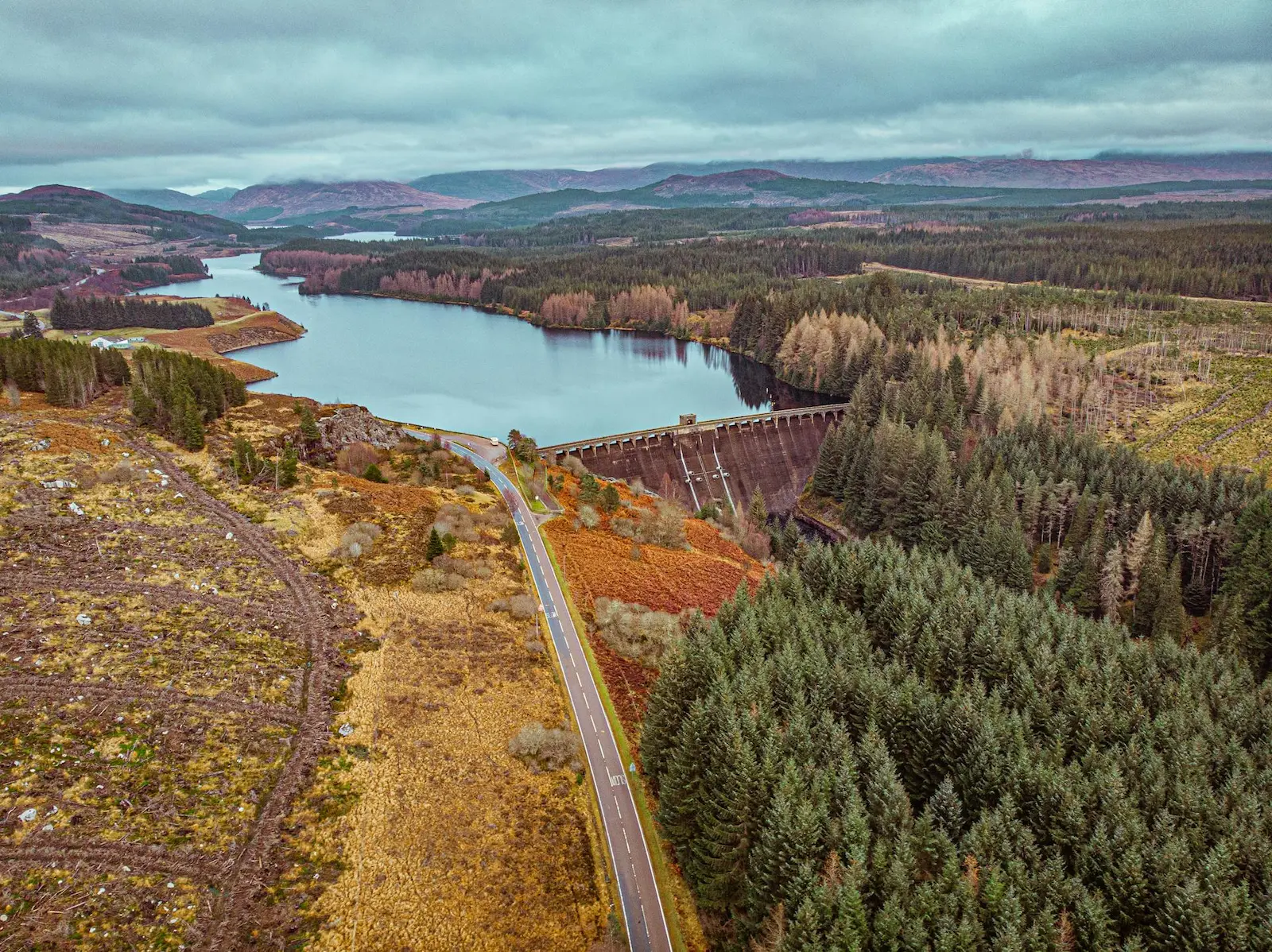
The bill your company pays for water is not just recompense for the service you receive now. Water companies have a statutory obligation to maintain their infrastructure and to plan and prepare for the future.
That is why the question of whether to switch water supplier is not just about whether you are getting a good price now, but also about whether you are getting value for money, both in terms of the current standard of service and what you can expect in the coming years.
Part of that preparation will be to ensure that customers are not unduly affected by growing water stress. A combination of a rising population and a changing climate means that Britain, a country that for so long had few water concerns, is now facing major water-related issues.
This has been highlighted by the government’s efforts since it took office in 2024 to build nine new reservoirs. Notably, these are all in the south, east and Midlands of England, where water stress is expected to be greatest.
Why Do Some Parts Of The UK Need New Reservoirs?
Indeed, last May, the government took direct control of the process to advance the two proposed reservoirs for Anglian Water, which covers the most water-stressed part of England. These are proposed for Lincolnshire and the Fens, respectively.
It has stated that without new reservoirs like these, water supplies will be under threat and building new homes will be a non-starter because there will be no reliable way of supplying them.
However, it may not be as simple as just digging a few new reservoirs. Firstly, even that process may face much opposition from campaigners, as has been seen with the White Horse Reservoir project in Oxfordshire. But there are also some practical doubts.
Part of this is based on questions about where the water will come from. Lower rainfall in a drier climate, especially in low-lying areas of the country like the east, risks meaning that there is a lot of potential capacity that may seldom get filled.
Why Are Some Reservoirs Not Full Even After All The Recent Rain?
Indeed, this issue has been raised with some current reservoirs in the south. Despite a lot of rainfall over autumn and winter, with some severe storms along the way, Cornwall’s largest reservoir, Colliford Lake on Bodmin Moor, is still only 80 per cent full.
Other reservoirs in the area, such as Roadford in Devon and Wimbleball on Exmoor, are nearly full, but Colliford Lake is suffering from a combined problem of the ongoing legacy of past droughts dating back to 2022 and having a lower catchment area than other reservoirs.
This, of course, is a problem that is bound to be worse in lowland areas, lacking the hills and abundant streams that will readily fill up reservoirs in the hills and mountains of Wales, northern England and Scotland.
Another way of filling reservoirs is to divert water from other sources, but there have been doubts about this as well, with water regulators expressing concern to Anglian Water and Cambridge Water that it was not clear how the Fens Reservoir would be filled.
There are four possible proposals, including diverting water from the River Nene or the Great River Ouse, but a partnership of Ofwat, the Environment Agency and the Drinking Water Inspectorate has expressed doubts about the viability and detail of the plans.
What this indicates is that having plans alone is not enough. Water companies need to show that they are viable and then deliver them in reality.
At the same time, new reservoirs are of little use if other steps are not taken to preserve water supplies. This can include reducing leaks, more water conservation measures and even novel solutions for businesses such as establishing on-site wells.
Could The UK End Up As Badly Water Stressed As Cyprus?
It is not hard to see what kinds of problems occur when water stress really kicks in. The UK experience is usually restricted to summer hosepipe bans, with extreme situations like the standpipes in the streets during the famous drought of 1976 being exceptional events.
However, such situations could become more common in the UK and extra measures might be required. The current situation in Cyprus may give a hint as to how bad things could get.
Faced with record low water levels in its reservoirs, authorities on the Mediterranean island have urged the population to cut their water use by ten per cent, or by running the taps for two minutes a day less.
Such measures may be possible for domestic users with minor inconvenience, but that is far less likely for business water customers who need the supplies for their production, such as drinks companies, while sporting venue owners need to water the grass.
Britain is not yet in the situation now faced by Cyprus. But unless water suppliers and the government work effectively together to tackle water stress, it may soon be.