
There are many reasons for business water customers to change water supplier. These can include price, the quality of customer service, or the speed with which problems are addressed.
However, some might want to consider long-term issues. If you are to sign up with a supplier with the intention of staying with them for many years, you would hope that they are preparing for the future to ensure supplies.
Doing that means all the following:
- Ensuring they have sufficient water supplies to begin with
- Maintaining and improving infrastructure to reduce leaks
- Working with customers on water-saving initiatives
- Strategically planning for the future as the climate changes and the population grows
It makes sense for firms to be customers of companies that are more clearly committed to doing these things, as such measures will be increasingly necessary in the coming years, especially in the drier areas of the UK.
What may not be immediately clear, however, is whether some proposed steps are necessarily enough to meet future challenges. In some cases, they may provide more questions than answers, rather than an obvious silver bullet.
Why Are There Doubts Over A New Reservoir Plan?
A prime example of such uncertainty has emerged in the East of England, where plans by Anglian Water and Cambridge Water for a new reservoir in the Cambridgeshire fens have run into a major stumbling block.
The issue is a simple one: Where is the water to fill the reservoir in the first place going to come from? Increasing reservoir capacity is no good unless it is utilised.
Given that the need for the reservoir, as well as a second planned by Anglian Water in south Lincolnshire, is based on the lack of rainfall in what is the driest part of the country, the source cannot come from rainfall alone.
Instead, this means it needs to be fed by a watercourse and, lacking the plethora of streams that would carry water down from the hills that reservoirs in upland areas rely on, that means tapping one of the area’s watercourses
The four proposed potential sources of this would be:
- The Great River Ouse
- The Ouse washes
- The River Nene
- The Middle Level System
Who Has Doubts About The Fens Reservoir?
However, a combined response from Ofwat, the Environment Agency and the Drinking Water Inspectorate has cast doubt on whether the plans at present are adequate.
“Whilst we note progress is being made with the overall reservoir design, there are important areas which require further work to achieve the maturity required for a gate three submission,” their response stated.
It added: “This includes areas such as remaining optionality in solution design, including the possible sources of water to fill the reservoir, and protection of the environment.”
This may seem like a merely technical question, but it is a significant one for a couple of reasons.
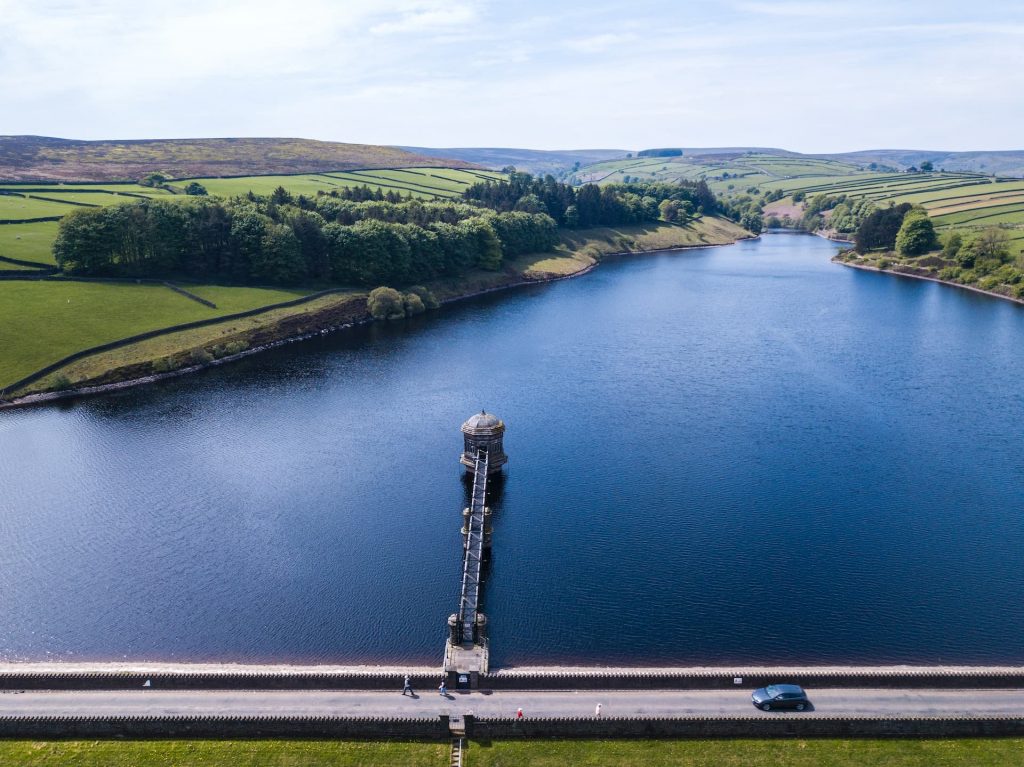
Firstly, the question of just how a reservoir will be reliably filled up is an important one in different schemes across the country.
Nine are planned across England, all in the Midlands, south and east of England, where rainfall levels are lower and less water runs off the hills, if indeed there are any hills nearby, which is clearly not the case in the Fens.
The new reservoirs are:
- The Fens Reservoir
- The South Lincolnshire Reservoir
- A second Cheddar Reservoir in Somerset
- Mendips Quarry in Somerset
- The Broad Oak reservoir near Canterbury
- River Adur Offline Reservoir in Sussex
- Abingdon Reservoir
- A reservoir in North Suffolk
- A reservoir in the West Midlands
These are in addition to the Havant Thicket Reservoir, on which construction started in the summer of 2024.
Can Your Water Supplier Deliver On Their Plans?
A second question is whether the promises being made by your water supplier are exaggerated. That is not to say they are necessarily seeking to mislead, although some companies have made promises in some areas (like cutting pollution) that they haven’t met.
Rather, it is that some might make proposals that ultimately they will not be able to deliver on, whether it is delivering a new reservoir that can access reliable sources of water to fill them up, or big infrastructure improvement or water saving targets that are unrealistic.
To be fair to Anglian Water, that is a company that acknowledges the challenges faced and its efforts to find solutions for the future are not just based on new reservoirs, but novel measures (by UK standards), such as the establishment of two seawater desalination plants.
Nonetheless, business water customers across the country need to keep tabs on what their water suppliers are doing. And if you are unhappy with them and want to change, our switching service makes it easy for you to do so.