The government has big plans to build new reservoirs to meet Britain’s future water needs, but after a drought-hit summer, doubts are growing over whether the current plans are sufficient and whether more could be done to push through some of the biggest projects.
When the last general election was held in 2024, the Labour Party listed the construction of new reservoirs as one of its infrastructure priorities, noting that none had been built in England since 1992.
Having taken office, the new administration set about making good on this promise by giving Nationally Significant Project status to some of the nine planned new reservoirs, all of which will be in the southern half of the country.
Although it is true that no new reservoir had been established since 1992, planning permission had already been given for the Havant Thicket Reservoir in Hampshire and work began on this in September 2024. Therefore, ten reservoirs are on the way.
Will The New Reservoirs Fix Britain’s Looming Water Shortages?
A question many business water users will ask is whether the new reservoirs will be enough. Moreover, if they are not, what else can be done? Will those who choose to switch water supplier enjoy reliability as well as a good price?
As the suppliers will not usually be involved in building major new reservoirs, the answers to this question may be more about maintenance, swift responses to problems and innovations such as the construction of wells and the tapping of springs.
Under the plans set out by the current government and agreed with the major water suppliers, the new reservoirs, some of which had been in the planning system long before 2024, will all be up and running by 2050, helping to meet the needs of a growing population.
They will also be needed to deal with a climate facing drier summers, but also wetter winters, which may raise questions over whether the best solutions include finding ways to store excess water in winter without it being vulnerable to evaporation under the summer sun.
However, the biggest question may be whether the timescale is ambitious enough, given the apparent acceleration in climate change.
What Do Business Leaders Want Andy Burnham To Do About The White Horse Reservoir?
Among those wanting to see change happen faster is a group of business leaders, who have called on the government to fast-track plans for a new reservoir in Oxfordshire.
The planned White Horse Reservoir near Abingdon is to be built and managed by Thames Water. Details include:
- It will contain enough water to supply 15 million people in the south-east of England
- The construction cost will be £6.6 billion
- Despite some well-organised and vocal opposition, Thames revealed that a survey had shown nine out of ten residents in the area were supportive of the plan
Addressing prime minister Andy Burnham, the letter, signed by the Thames Valley Chamber of Commerce and others, argued that the project should be given critical national priority status.
It said: “This would create a level playing field with nationally significant energy projects, removing unnecessary barriers and accelerating delivery through the planning process.”
This call comes as Britain has just had its hottest summer on record, with parts of the country barely seeing any rain at all for weeks on end. Referring to this, the letter said: “The case for action has never been stronger”.
Welcoming the letter, Thames Water’s delivery director for consents and place, Leonie Dubois, highlighted the reservoir’s importance for business customers, “including manufacturing, industry and construction, through to restaurants and pubs”.
She said this is “why it’s vital we progress White Horse Reservoir at the pace the country urgently needs.”
What Are The Technical Challenges Involved In Building The White Horse Reservoir?
The calls have come just as Thames has made some alterations to the proposals, but these are concerned with site access and environmental mitigation during what will be a very technical construction process.
A key reason for this is that while the location is one of the very few in the south-east with the clay needed to build a reservoir, it is only a few metres deep, meaning a large retaining wall will need to be built up to hold most of the water, the first of its kind in Britain.
In some ways, however, this might be seen as the kind of innovation that is required to help Britain expand its reservoir capacity, especially in parts of the country where the ground conditions, climate and topography are less favourable.
As things stand, the White Horse Reservoir is set to be up and running in 2040, before most of the other reservoirs in the government’s list of nine priority bodies of water.
Elsewhere, the Fens Reservoir in Cambridgeshire is due to be ready in 2036, while the Havant Thicket Reservoir will be complete in 2031.
However, the Mendip Quarries reservoir in Somerset must wait for quarrying to finish in 2040 before work can begin, although its current use will provide some de facto excavation, while the Adur reservoir in Sussex is yet to confirm a site.
Why Will Meeting Water Challenges Be Harder In The South Of England?
The kind of novel construction methods that the White Horse Reservoir will use highlights the need to work differently in the south of England than elsewhere.
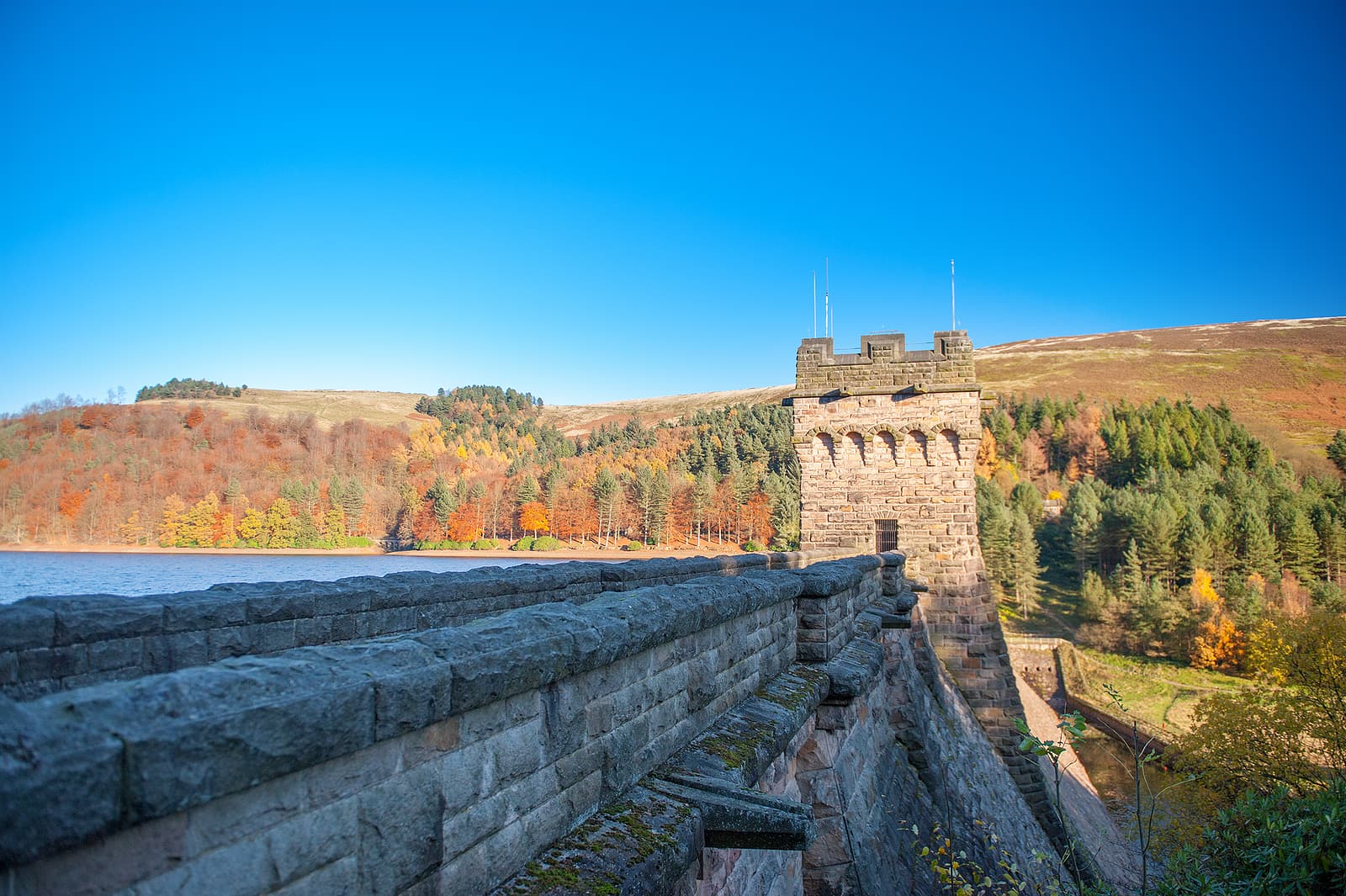
As an article in the Independent noted last month, this can make building new reservoirs technically harder, compared to the simple valley damming methods used in hilly areas in the north, Scotland and Wales.
Moreover, lower rainfall in the south and a lack of upland catchment areas mean reservoirs need river water to be diverted.
These factors all add to the challenge, not to mention the cost and timescale, of providing more water in the south of England, where the projected shortfalls will be greatest.
This does not mean the north will not face its own challenges, for there will no doubt be times of drought there too. Indeed, national park planning rules will ensure that, for example, no more lakes in the Lake District will go the way of Thirlmere and Haweswater.
Nonetheless, it is clear which regions face the most pressure and for business water customers, there will be some concern over whether the reservoir plans will be timely enough and add sufficient supplies.
Does your current supplier have plans to help you build the resilience you will need in a changing climate? If not, our switching service may help you to find a company that will do a lot more than just give you a better price.